When calculators got soft and emotional

Mario Bellini designed the Divisumma 18 for Olivetti in the late 70s, and it broke every rule about what calculators were supposed to be. It was a pocket object—the delicate mechanism wrapped in a thin film of bright orange rubber.
Fifty years later, its influence is everywhere—from neumorphism's soft shadows in digital interfaces to the tactile edges of the latest iPhones. Following Olivetti's philosophy of humanizing technology, Bellini made something soft, tactile, emotional. These same characteristics are what designers chase today—trying to make digital products feel tangible, warm, human. Less cold and inert.
The Divisumma became more than a calculator—it was a statement. In an era when technology was still intimidating for many, Bellini proved that machines could be approachable, even friendly. That rubber keypad wasn't just innovation, it was an invitation.


"I was shown the components so I could give them an almost urban layout, to make the object more beautiful, more understandable, easy to use, above all easy to understand," Bellini explained. Design as translation between technology and people.
The Divisumma proved that even the most technical objects could have soul. Bellini showed that mass production didn't have to mean soulless production.
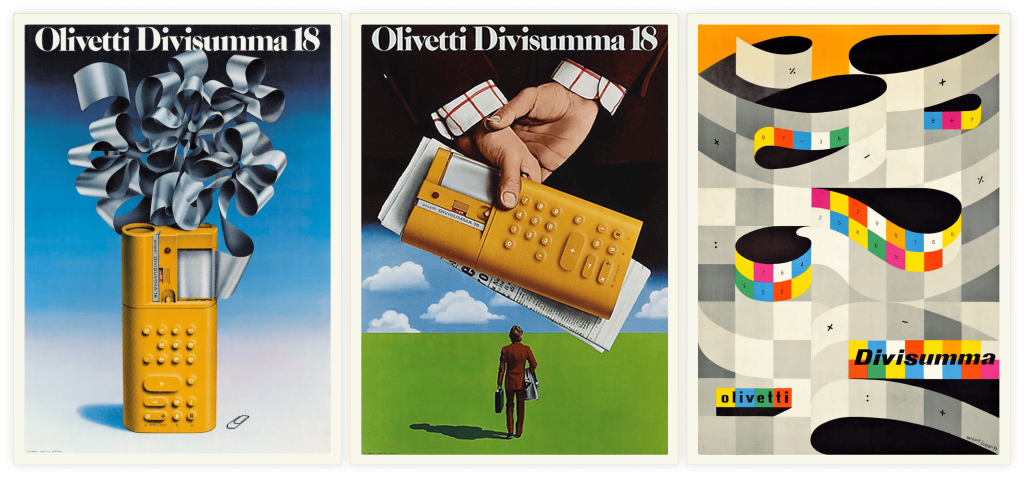
"Design as translation between technology and people" — Mario Bellini
All images © their respective photographers and creators. All rights reserved.