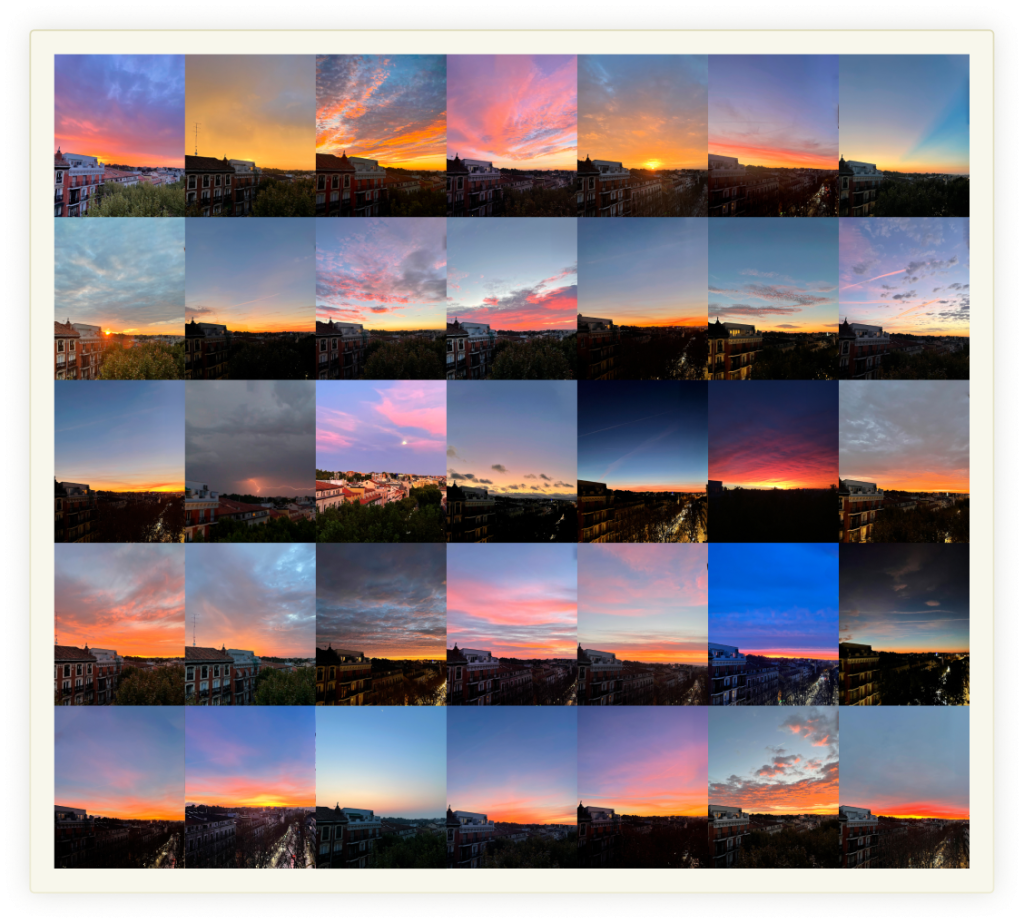
There are hundreds of photos of skies on my phone. Almost all from the same window.
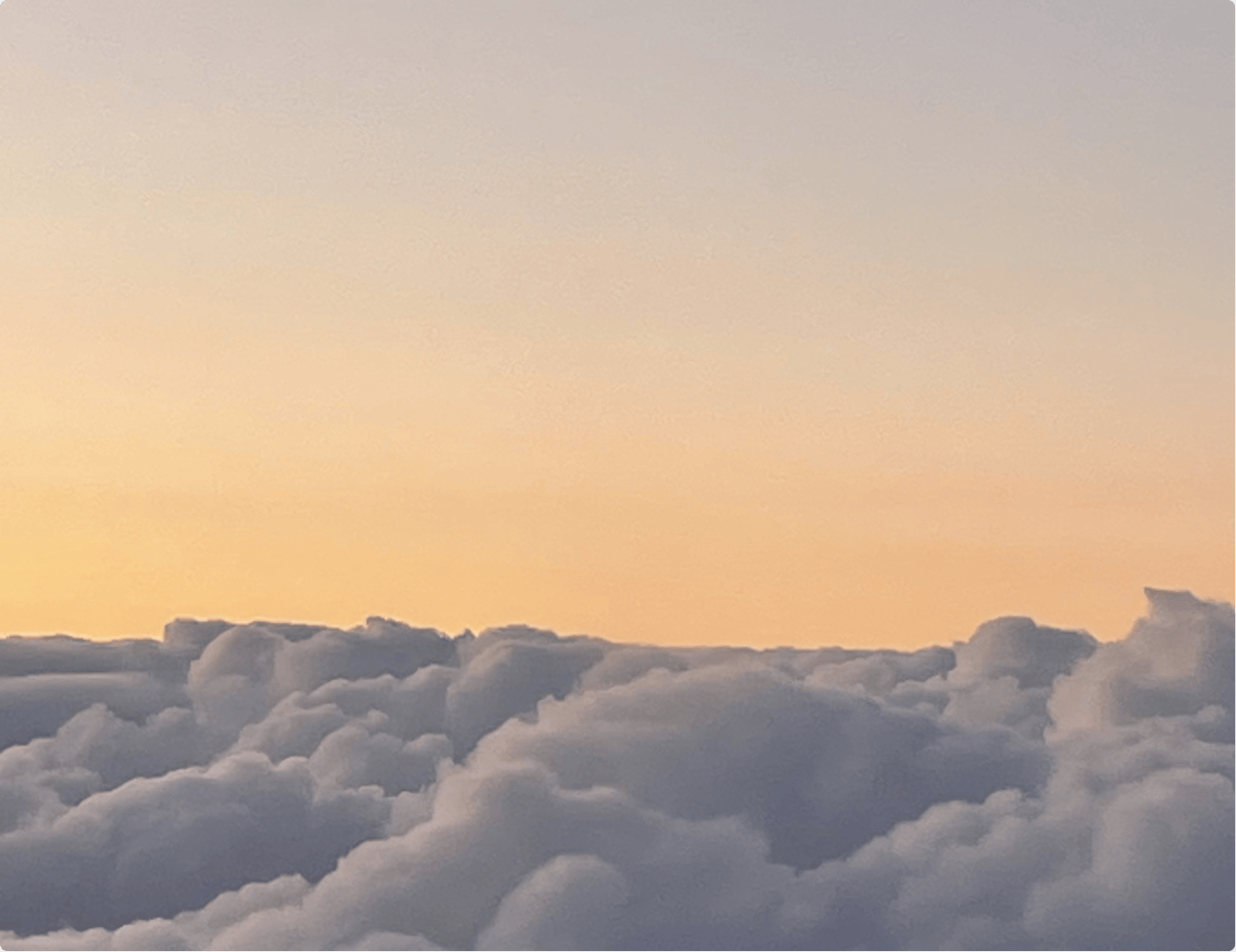
Every morning I wake up and head to the window, expectant of whatever spectacle is waiting on the other side of the curtains.
Blue, yellow, pink, even deep indigo. Some mornings the sky is on fire. Others, it's sprinkled with golden light in a way that feels almost spiritual. Witnessing these sunrises in my pyjamas, rubbing my eyes half asleep, feels like a gift.
I have a folder on my phone with hundreds of photos of skies, most of them taken from this same window. You might think it's a pointless obsession, but I can't help it. Day after day I keep going back. What will be behind the curtain today.
I don't look at the sky for anything in particular. What I mean is, I don't look expecting to get something out of it. But those mornings leave something behind. A color I find myself searching for months later, in the middle of a project. A light I remember without knowing when I first saw it. Maybe that's precisely why they stay — because I'm not asking them to do anything for me.
I try to resist the urge to share it every time. But, I mean — look at these. If you follow me on Instagram you know exactly what I'm talking about. I do it all the time.
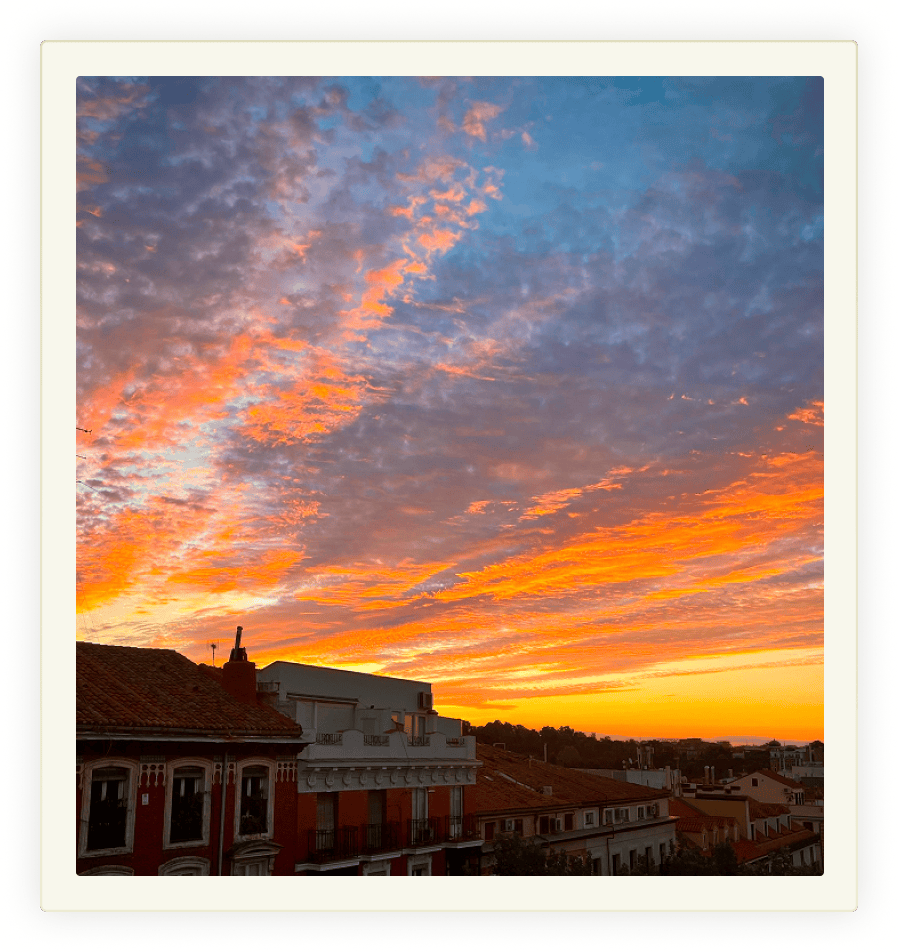
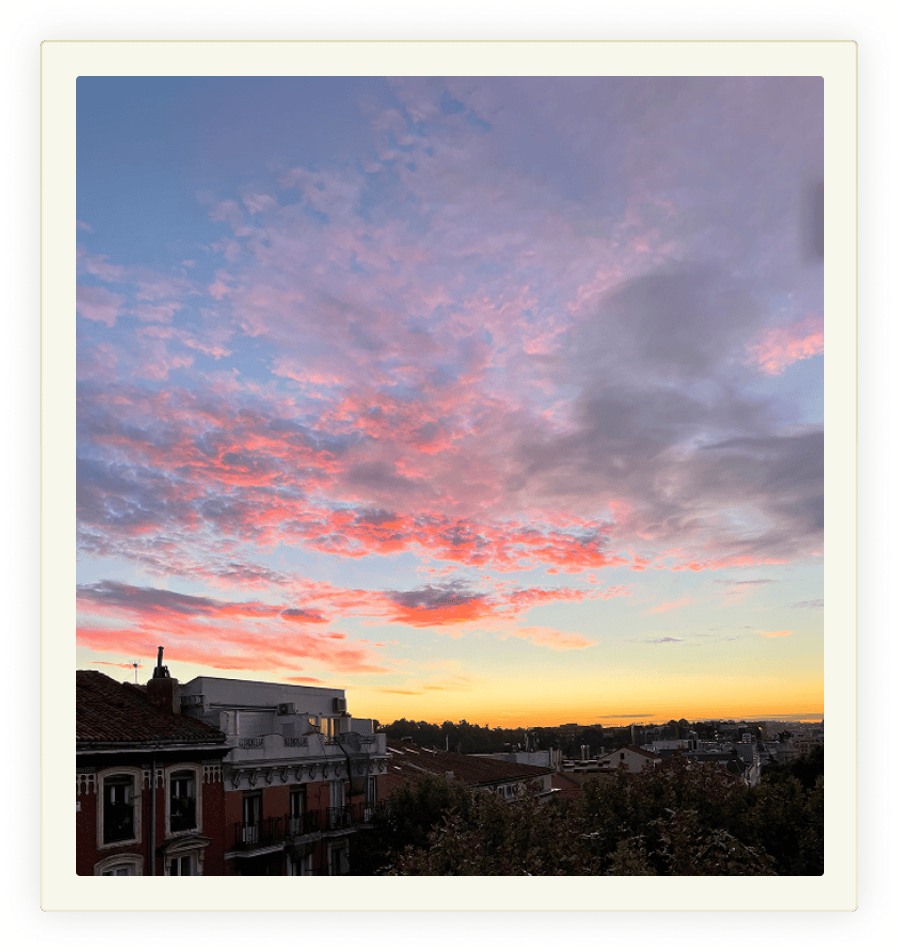
I find myself asking, what the fuck, how is that even possible. The colors, the light — it's mesmerizing. It's the same feeling I get in winter, when all the trees are standing there bare and it's freezing cold, and I wonder how summer could ever happen again. I know it will. I know that's how it works. And yet, every time, it seems impossible to me.
We tend to think that in order to see something beautiful we have to travel a thousand kilometres from home. Go to the fancy places where everything is neatly arranged, and that if we just make it to those exclusive spots we'll finally see something extraordinary, something that will mark us for life. We take the same photo, from the same point of view as hundreds of people before us. And that's fine.
But looking —really looking— isn't just recording, it's feeling it deep down in your guts. And that is hard. Looking takes effort. Sometimes it even hurts. Monet wrote as much to his wife more than a hundred years ago, while he was painting Rouen Cathedral:
"I am furious at myself… I am doing nothing of value: I don't know how many sessions I have spent on these paintings and do what I may, they don't advance… it's depressing."
We were taught that beautiful things are inaccessible, or exotic, or rare. But I think there's a lot of beauty in the everyday, and we often dismiss it precisely because it's ordinary.
In the same way, we tend to assume that the people with an eye for beauty are simply lucky — as if they had some kind of superpower that makes them special. But I think it's more of an attitude. Every day there's a beautiful sunset, a light that falls in a particular way, flowers in striking colors, and countless other things that only the curious notice — the ones who pay attention, who are willing to cultivate the sensibility to see the extraordinary in what, at first glance, seems trivial.
Looking is about feeling. Listen to your body. It's probably trying to tell you something. Finding beauty in the way light filters through the leaves of a tree isn't going to make you a great designer overnight. But those experiences stay with you. And they surface again when the moment is right.
"The subject is something secondary; what I want to reproduce is what lies between the subject and myself."
They'll be there, disguised as intuition — that feeling of knowing something will work out even when you can't explain why. That's something you can try to cultivate. The way we used to look as children, before we started taking everything for granted, before nothing surprised us anymore.
Don't be ashamed to be stunned by things.