On the friction worth keeping, the friction worth losing, and why we've stopped being able to tell them apart.
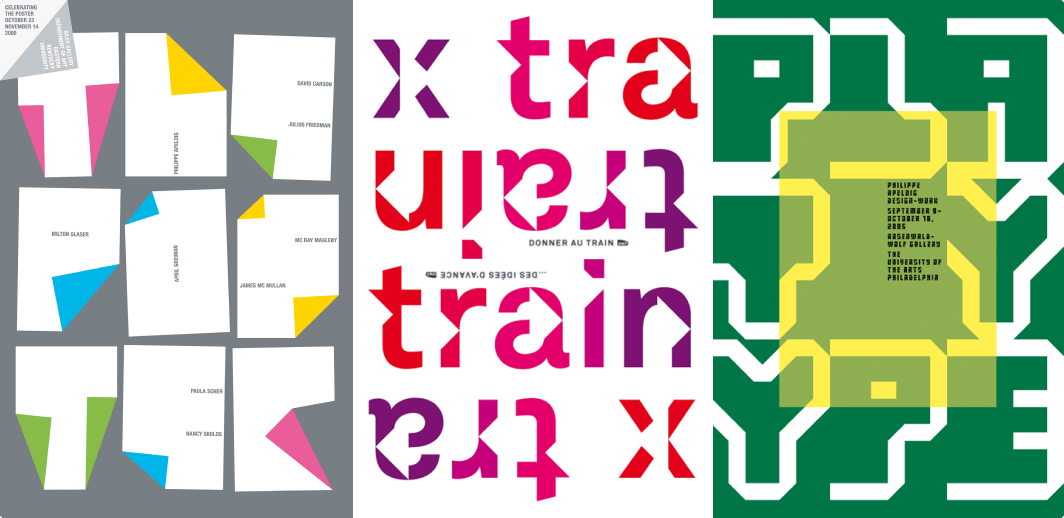
There's something mesmerizing about Philippe Apeloig's work that makes your brain tickle. It's a playful dance between what you see and the sudden realization of what it's really about. His posters only come to life if you engage with them; it's an active process where you are both the spectator and the creator.
Even if this might feel like magic it is just how our brain works, and this little dialogue we have with the piece makes us smile and nod along. The need to dig into it to grasp the meaning of it, the delayed gratification that comes with this tiny effort we've made becomes the experience, and that's what sticks with us.
This misalignment you experience ignites your mind, and your thoughts start running to solve the puzzle posed in front of you. We have experienced this feeling many times in our lives, from the trivial daily inconvenience of filling out a form to the genuinely painful things we'd do anything to undo. But somewhere along the way we stopped sorting them. We've come to treat all of it as the same problem with the same solution: remove the discomfort.
For as long as we've existed, technology has always been the answer that helped us cope with it; the idea of innovation and future was sold through smooth processes, simplified interfaces and seamless materials. Technology became a synonym for prosperity and happiness, one in which any sign of hardship should be eliminated.
We've come a long way stripping our lives of any form of discomfort. But in this frenzy to make our lives easier we started cutting something else.
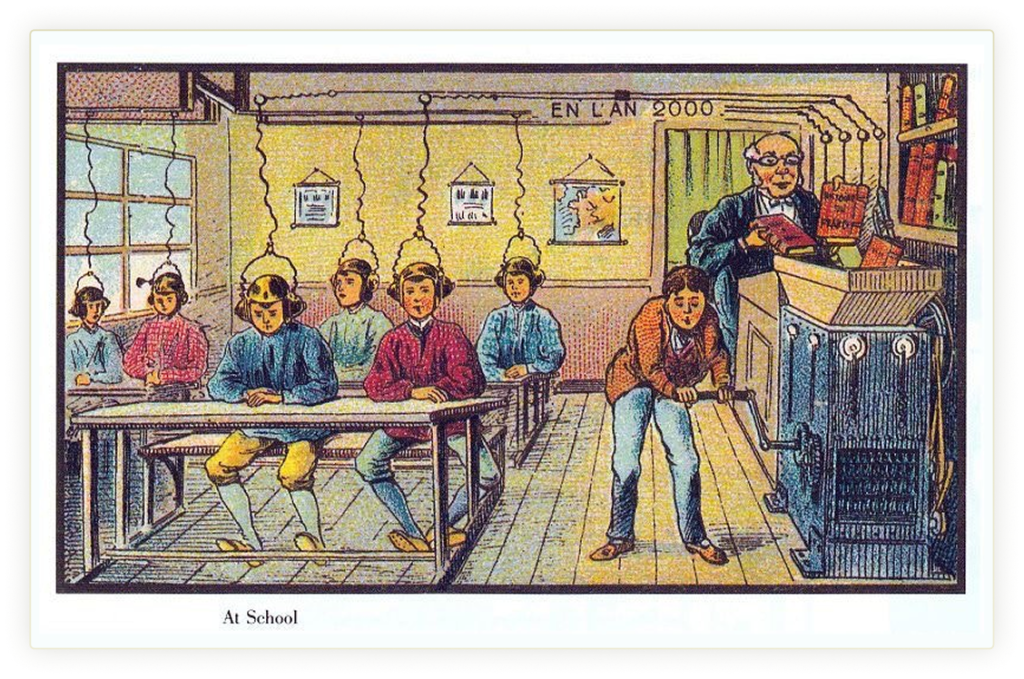
We dreamt about the time we could just plug into some headphones and the knowledge could be poured straight into our heads, learn a new language while sleeping or push a button and magically clean all the plates. Some of those dreams came true and made us freer and better, and some of them removed the very friction that was the learning, the friction that was the becoming.
Not all friction is the same kind. Some is internal to the value of what you're doing, the moment you remove it, the thing itself disappears. Some of it is just incidental, removing it doesn't make the thing you want disappear, it only becomes easier to reach.
Take the dishwasher, the friction is incidental. The clean plate is the point because the scrubbing is never the value. Take it away and you still have the clean plate, plus your evening back. But when you learn a language the friction is the value. The struggle to reach for the word, to be misunderstood and try again. That effort isn't getting in the way of learning the language, it is learning the language. If you take it away you have a pile of words you can't relate to each other.
None of this means that struggle is good for you. The friction worth protecting is the kind that builds something: a skill, a thought, yourself. It has nothing to do with pain. Romanticizing hardship, hoping the grind makes us stronger, is the perspective of those who've never had to live inside it.
Nobody argues we should remove the friction that's good for us, no one would agree to that. But the argument tends to arrive disguised. You wouldn't want to scrub plates by hand, or stand in line for three hours to file a form, and of course you wouldn't. So when the same logic comes for the friction of being misunderstood, of an idea you didn't ask for, of sitting with someone who disagrees with you, it arrives wearing the dishwasher's clothes, and goes through undetected.
Honestly no one decided to wake up one morning and do it intentionally. There was no room where someone chose to strip the friction of disagreement out of public life. It happened the way these things happen now: in a thousand small design decisions, each one defensible, each one sold as a kindness. The feed that learns what you like and gives you more of it was built with good intentions. It removed the tedious work of filtering through things that annoy you.
And what it produced, at scale, was a population that has slowly lost the habit of being disagreed with, and now every one of us is sealed into a little bubble where our own version of the world feels just right and inevitable. At first nobody openly decided to polarize us, the polish did, and then it was eventually reinforced.
We tell ourselves that we would resist it, but we don't, and now that far more powerful technologies arrive disguised as impartial agents there to help you, it's harder than ever. Recent research found that people consistently prefer AI that flatters and agrees with them, even when it leaves them less willing to repair a conflict and more convinced they were already right. In a way, and this is messed up, we prefer the thing that makes us worse.
None of this means the answer is to make things hard on purpose, or to manufacture struggle for its own sake. We should truly weigh how and when friction is the good call before jumping straight into the "don't make me think" solution. Think of the warning that appears before you delete a file you can't recover: are you sure? That is friction placed deliberately, at the one moment it matters. Good design has always understood that some actions should resist you.
The capacity to stay with this feeling, instead of swiping it away, is not a small thing. It is where learning lives, learning to lose and eventually building the strength to stand up for what's important. And it isn't only a private matter. The friction of being disagreed with and staying in the room anyway is what a society runs on. This same friction we're quietly removing is the one a public needs to hold itself together.
We shouldn’t worry that a machine would do things for us. What should truly set off the alarm is that we are slowly losing the friction that taught us how to think at all. We're running at all costs towards the end result without even noticing that every kind of friction is gone, because losing it feels so much like relief.
All images © their respective photographers and creators. All rights reserved.